LAUNCH ANNOUNCEMENT

Build AI Agents and Workflows
Scale With Confidence

Orkes is the battle-tested orchestration platform rooted in open-source with built-in reliability, observability, and control.
Process Payment Worker
public class PaymentWorkers {
    private final PaymentRepository paymentRepository;

    public PaymentWorkers(PaymentRepository paymentRepository) {
        this.paymentRepository = paymentRepository;
    }

    @WorkerTask("ProcessPayment")
    public PaymentResult processPayment(PaymentDetails paymentDetails) {
        return this.paymentRepository.processPayment(paymentDetails);
    }

    @WorkerTask("RefundPayment")
    public RefundResult refundPayment(String transactionId) {
        return this.paymentRepository.refundPayment(transactionId);
    }

    @WorkerTask("GetPaymentStatus")
    public PaymentStatus getPaymentStatus(String transactionId) {
        return this.paymentRepository.getPaymentStatus(transactionId);
    }
}
class PaymentWorkers:
    def __init__(self, payment_repository: PaymentRepository):
        self.payment_repository = payment_repository

    @worker_task(task_definition_name="ProcessPayment")
    def process_payment(self, payment_details: PaymentDetails):
        return self.payment_repository.process_payment(payment_details)

    @worker_task(task_definition_name="RefundPayment")
    def refund_payment(self, transaction_id: str):
        return self.payment_repository.refund_payment(transaction_id)

    @worker_task(task_definition_name="GetPaymentStatus")
    def get_payment_status(self, transaction_id: str):
        return self.payment_repository.get_payment_status(transaction_id)
func (w *PaymentWorkers) ProcessPayment(task *model.Task) (interface{}, error) {
    var paymentDetails = DecodePaymentDetails(task.InputData)
    var result, err = w.Repo.ProcessPayment(paymentDetails)

    if err != nil {
        return nil, err
    }

    return map[string]interface{}{
        "transactionID": result.TransactionID,
        "status":        result.Status,
        "amount":        result.Amount,
    }, err
}

func (w *PaymentWorkers) RefundPayment(task *model.Task) (interface{}, error) {
    var transactionID = task.InputData["transactionID"].(string)
    var refunded, err = w.Repo.RefundPayment(transactionID)

    return map[string]interface{}{
        "refunded": refunded,
    }, err
}

func (w *PaymentWorkers) GetPaymentStatus(task *model.Task) (interface{}, error) {
    var transactionID = task.InputData["transactionID"].(string)
    var status, err = w.Repo.GetPaymentStatus(transactionID)

    if err != nil {
        return nil, err
    }

    return map[string]interface{}{
        "transactionID": status.TransactionID,
        "status":        status.Status,
        "amount":        status.Amount,
    }, err
}

public class PaymentWorker : IWorkflowTask {
    private readonly IPaymentRepository paymentRepository;
    public string TaskType { get; }

    public PaymentWorker(IPaymentRepository paymentRepository) {
        this.paymentRepository = paymentRepository;
        TaskType = "ProcessPayment";
    }

    public TaskResult Execute(Task task) {
        var paymentDetails = task.InputData["paymentDetails"] as PaymentDetails;
        var result = paymentRepository.ProcessPayment(paymentDetails);
        
        return task.Completed(new Dictionary<string, object> {
            { "result", result }
        });
    }
}
export async function processPayment(task) {
    return {
        outputData: await paymentRepository.processPayment(task.inputData)
    };
}

export async function refundPayment(task) {
    return {
        outputData: await paymentRepository.refundPayment(task.inputData?.transactionId)
    };
}

export async function getPaymentStatus(task) {
    return {
        outputData: await paymentRepository.getPaymentStatus(task.inputData?.transactionId)
    };
}
export async function processPayment(task: Task): Promise<Partial<TaskResult>> {
    return {
        outputData: await paymentRepository.processPayment(task.inputData)
    };
}

export async function refundPayment(task: Task): Promise<Partial<TaskResult>> {
    return {
        outputData: await paymentRepository.refundPayment(task.inputData?.transactionId)
    };
}

export async function getPaymentStatus(task: Task): Promise<Partial<TaskResult>> {
    return {
        outputData: await paymentRepository.getPaymentStatus(task.inputData?.transactionId)
    };
}
{
  "createTime": 1759861689504,
  "updateTime": 1759861689504,
  "name": "ProcessTransaction",
  "description": "Processes a financial transaction",
  "version": 1,
  "tasks": [
    {
      "name": "GetAccountInfo",
      "taskReferenceName": "GetAccountInfo",
      "inputParameters": {
        "llmProvider": "Gemini",
        "model": "gemini-2.0-flash",
        "promptName": "ExtractAccountInfo",
        "promptVariables": {
          "accountSummary": "${workflow.input.accountSummary}"
        }
      },
      "type": "LLM_TEXT_COMPLETE",
      "decisionCases": {},
      "defaultCase": [],
      "forkTasks": [],
      "startDelay": 0,
      "joinOn": [],
      "optional": false,
      "defaultExclusiveJoinTask": [],
      "asyncComplete": false,
      "loopOver": [],
      "onStateChange": {},
      "permissive": false
    },
    {
      "name": "switch",
      "taskReferenceName": "switch_ref",
      "inputParameters": {
        "switchCaseValue": ""
      },
      "type": "SWITCH",
      "decisionCases": {
        "switch_case": [
          {
            "name": "FraudDetection",
            "taskReferenceName": "FraudDetection",
            "inputParameters": {
              "transaction": "${workflow.input.transactionInfo}",
              "account": "${GetAccountInfo.output.response}"
            },
            "type": "SIMPLE",
            "decisionCases": {},
            "defaultCase": [],
            "forkTasks": [],
            "startDelay": 0,
            "joinOn": [],
            "optional": false,
            "defaultExclusiveJoinTask": [],
            "asyncComplete": false,
            "loopOver": [],
            "onStateChange": {},
            "permissive": false
          }
        ]
      },
      "defaultCase": [
        {
          "name": "ProcessPayment",
          "taskReferenceName": "ProcessPayment",
          "inputParameters": {
            "transaction": "${workflow.input.transactionInfo}",
            "account": "${GetAccountInfo.output.response}"
          },
          "type": "SIMPLE",
          "decisionCases": {},
          "defaultCase": [],
          "forkTasks": [],
          "startDelay": 0,
          "joinOn": [],
          "optional": false,
          "defaultExclusiveJoinTask": [],
          "asyncComplete": false,
          "loopOver": [],
          "onStateChange": {},
          "permissive": false
        }
      ],
      "forkTasks": [],
      "startDelay": 0,
      "joinOn": [],
      "optional": false,
      "defaultExclusiveJoinTask": [],
      "asyncComplete": false,
      "loopOver": [],
      "evaluatorType": "value-param",
      "expression": "switchCaseValue",
      "onStateChange": {},
      "permissive": false
    },
    {
      "name": "SendNotification",
      "taskReferenceName": "SendNotification",
      "inputParameters": {
        "account": "${GetAccountInfo.output.response}"
      },
      "type": "SIMPLE",
      "decisionCases": {},
      "defaultCase": [],
      "forkTasks": [],
      "startDelay": 0,
      "joinOn": [],
      "optional": false,
      "defaultExclusiveJoinTask": [],
      "asyncComplete": false,
      "loopOver": [],
      "onStateChange": {},
      "permissive": false
    }
  ],
  "inputParameters": [
    "accountSummary",
    "transactionInfo"
  ],
  "outputParameters": {},
  "failureWorkflow": "",
  "schemaVersion": 2,
  "restartable": true,
  "workflowStatusListenerEnabled": false,
  "ownerEmail": "test@example.com",
  "timeoutPolicy": "ALERT_ONLY",
  "timeoutSeconds": 0,
  "variables": {},
  "inputTemplate": {},
  "enforceSchema": true,
  "metadata": {},
  "maskedFields": []
}


Used by 1,000's of Organizations Globally

The Agentic Workflow Orchestration Platform

AI Agents

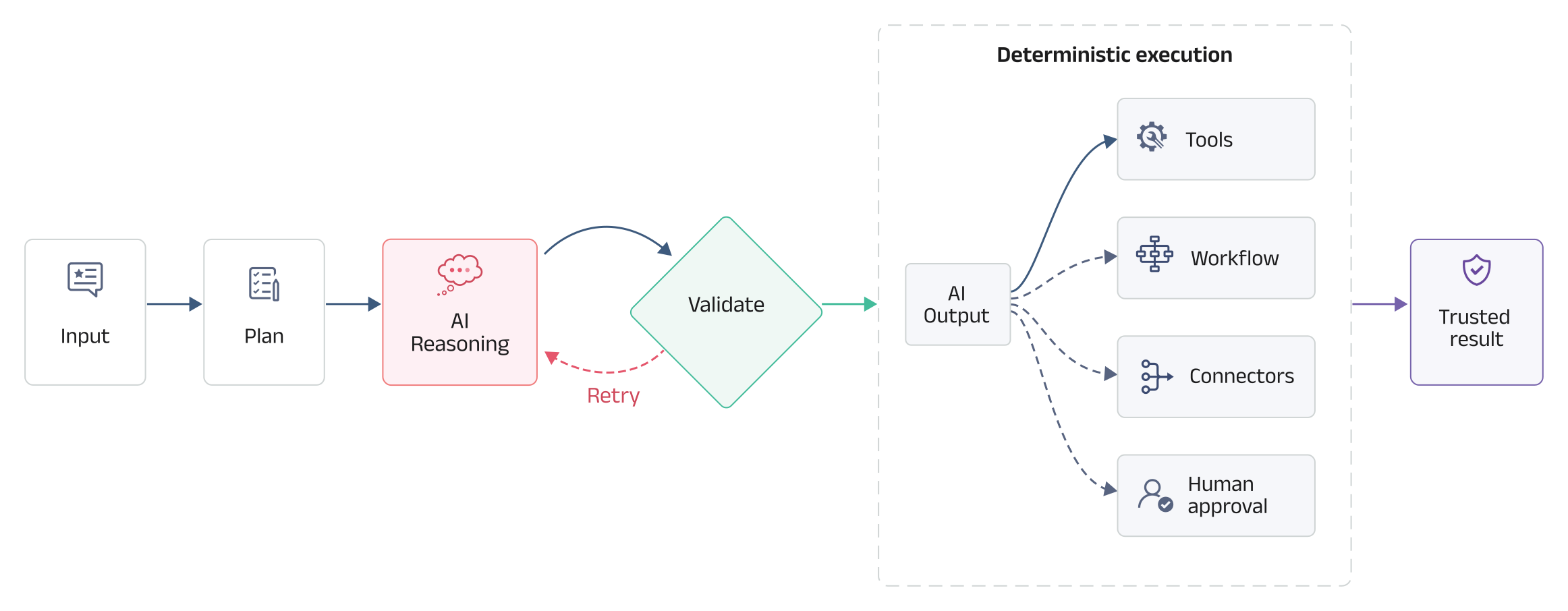
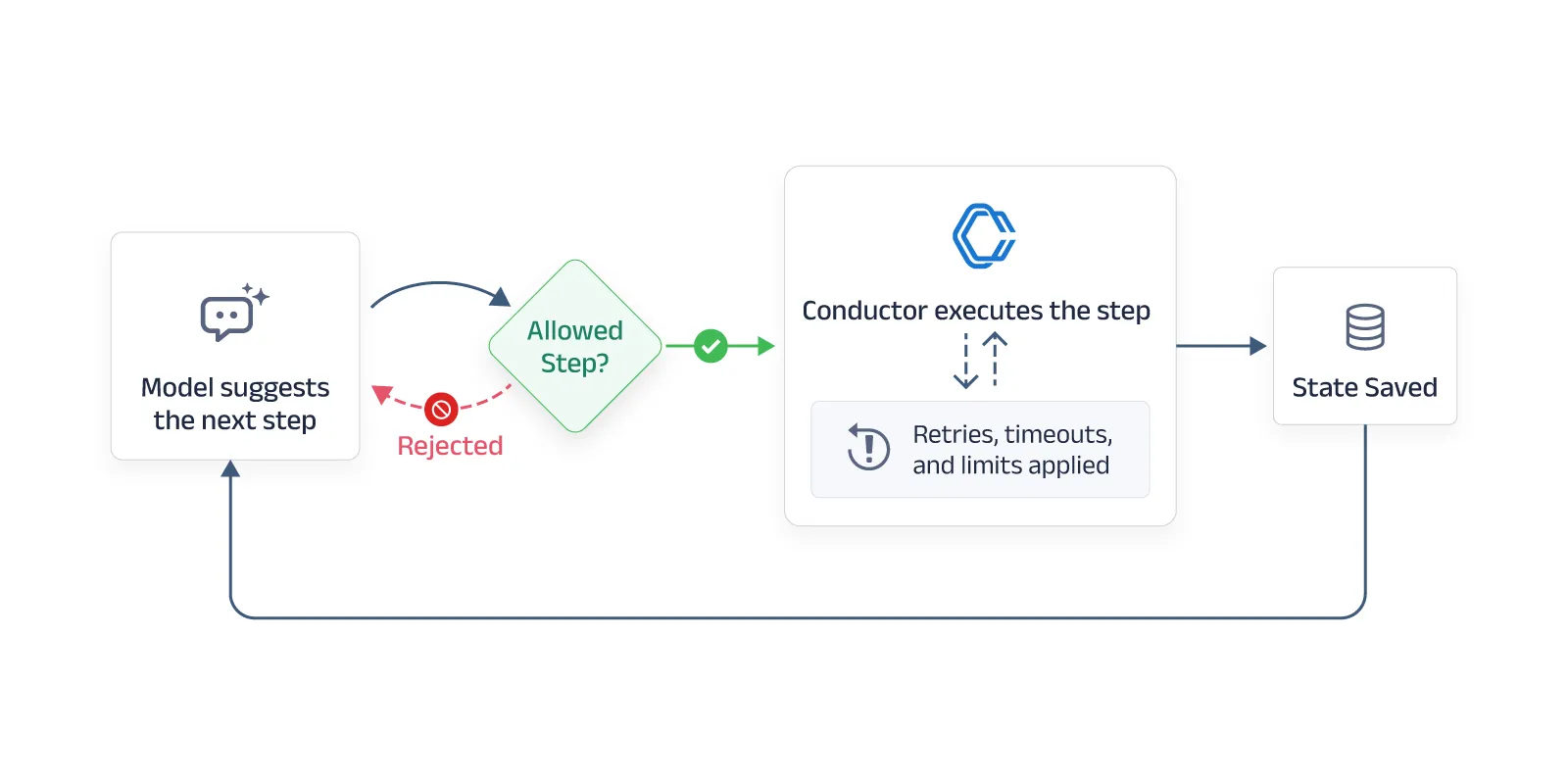
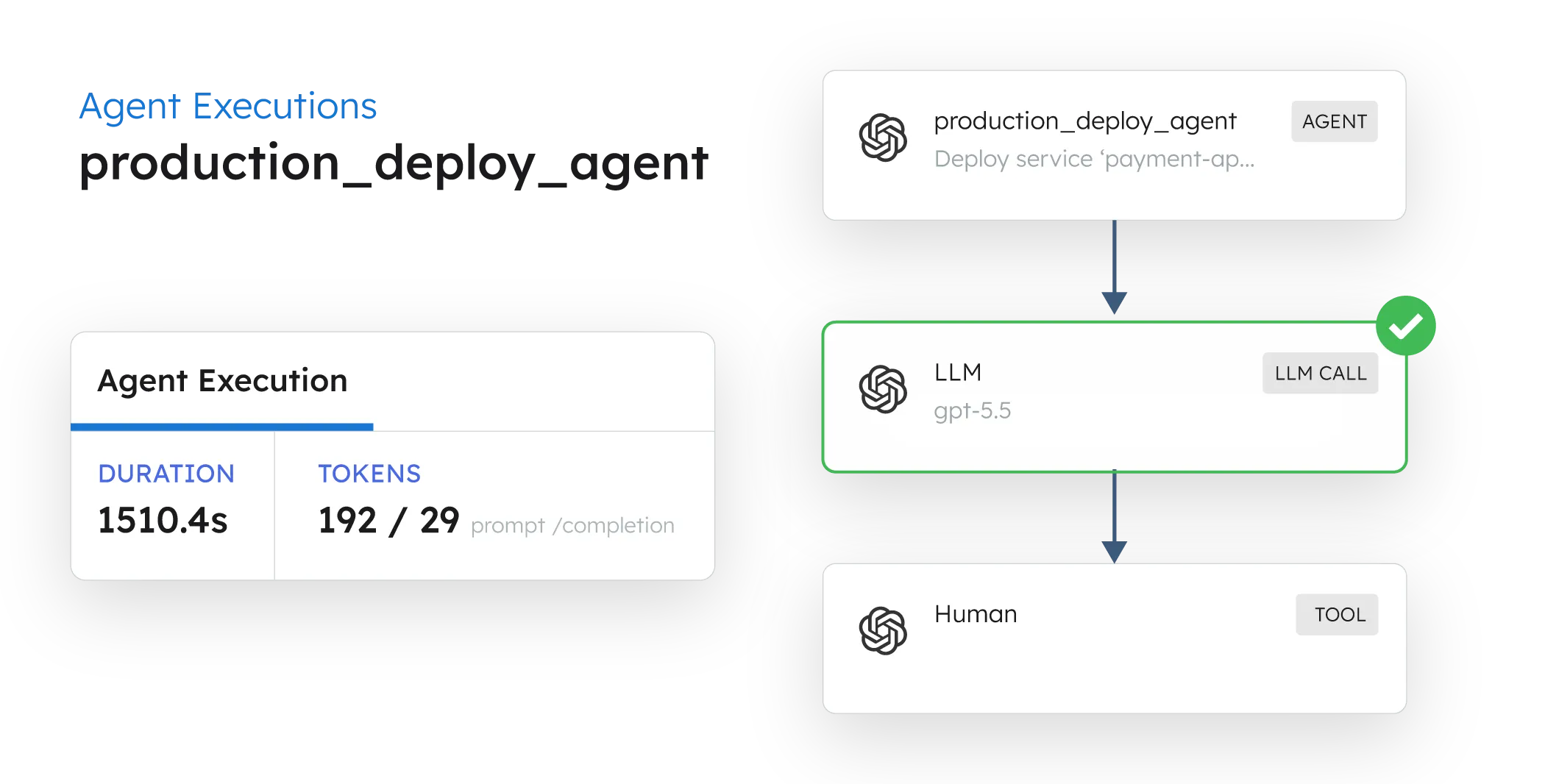
Agentic decision making with workflows that reason, adapt and act

Humans

Keep humans in the loop for approvals, oversight, and exception handling

Services

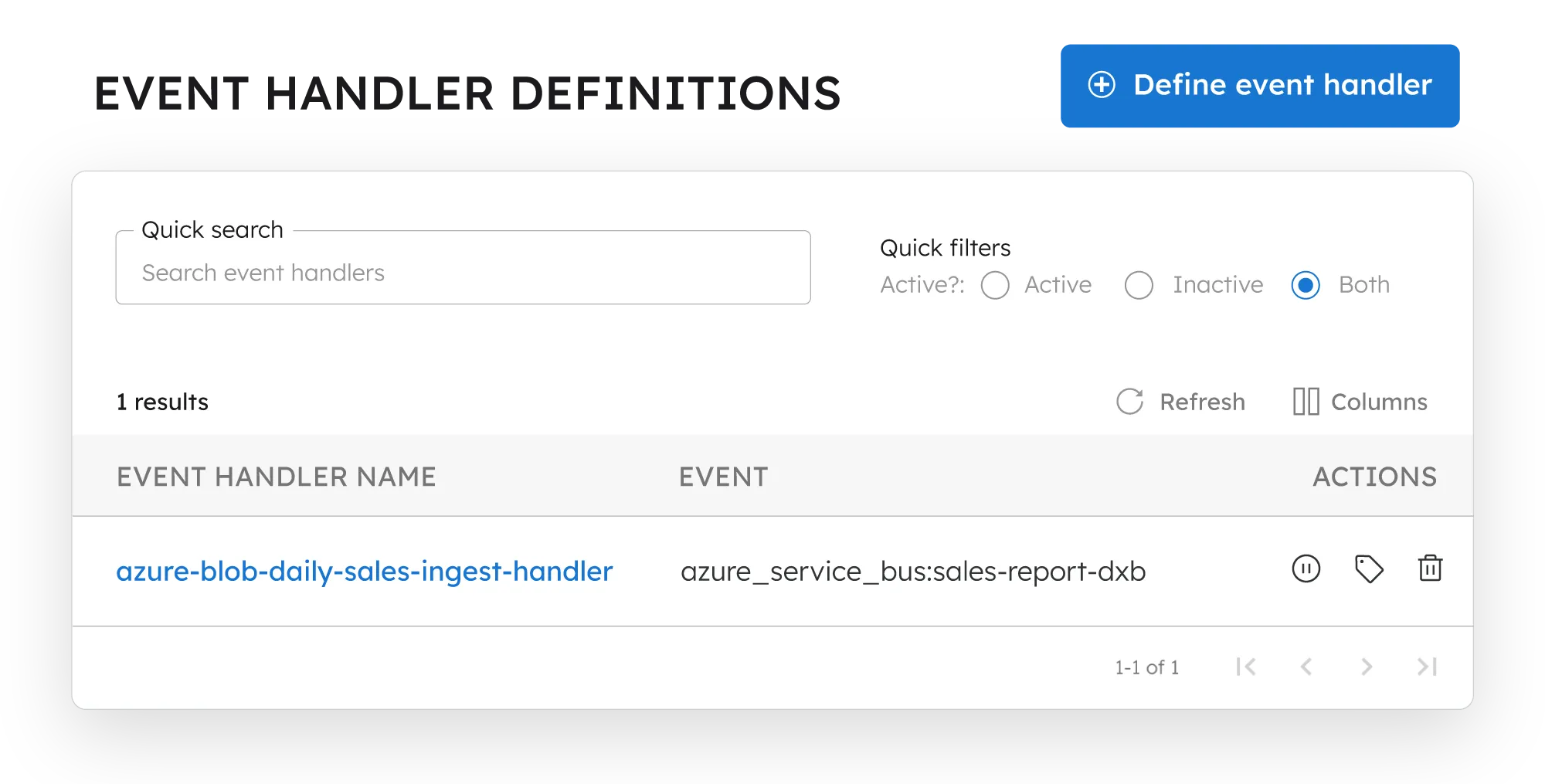
Orchestrate microservices, APIs and tools via MCP natively

Beyond the POC: Making Agents Reliable at Scale

Orchestration is the missing layer that moves agents from demos to production.

MCP Gateway

Turn internal APIs into safe, consistent tools that agents and LLMs can use right away.

Agentic Workflows

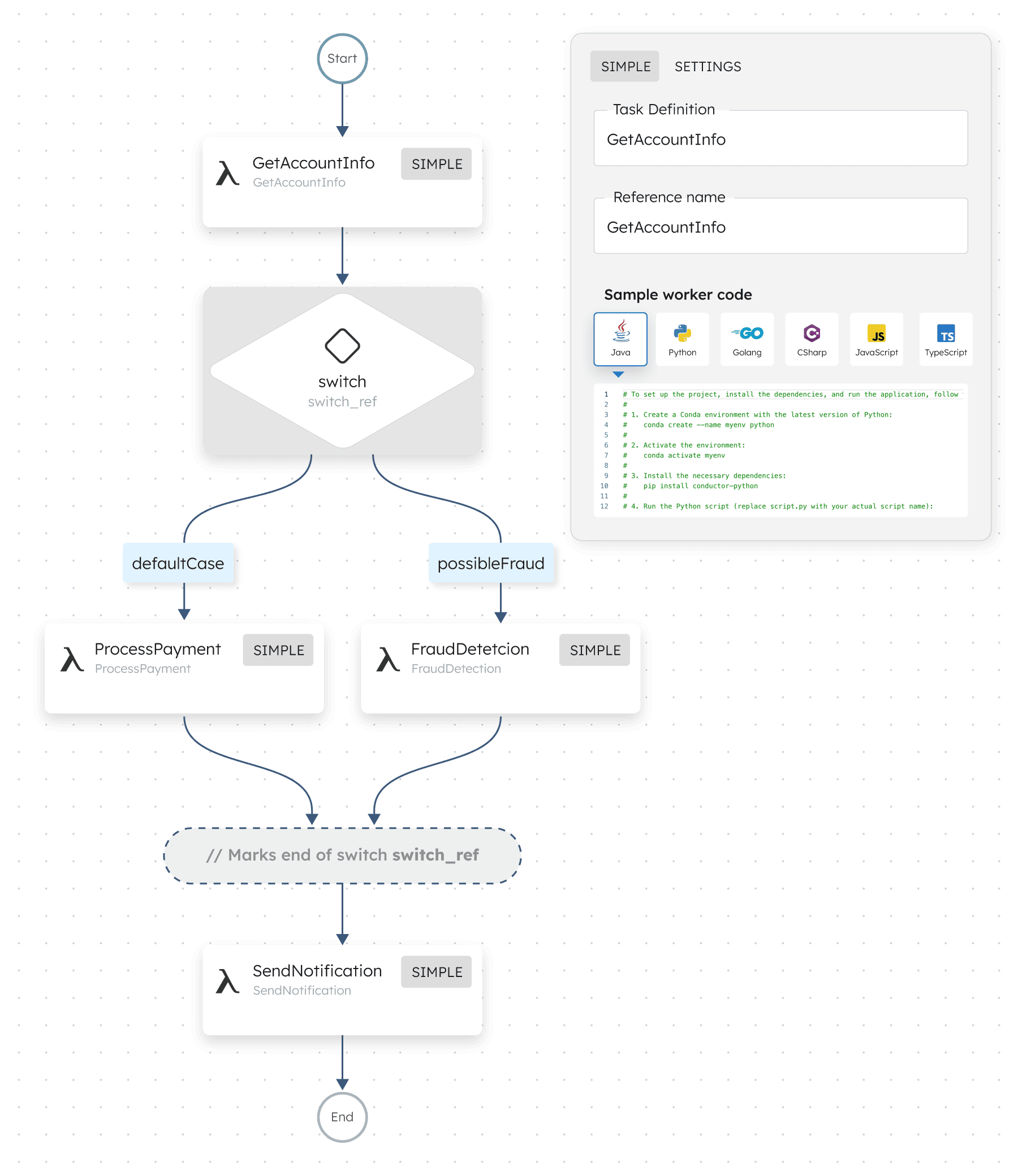
Blend structured process stages with LLM driven decisions to handle real world complexity.

Prompt to Workflow

Turn natural language into a strong starter workflow you can review, edit, and ship fast.

Build Workflows

public class UserWorkers {
    private final UserRepository userRepository;

    public UserWorkers(UserRepository userRepository) {
        this.userRepository = userRepository;
    }

    @WorkerTask("GetUserInformation")
    public UserProfile getUserInformation(String userID) {
        return this.userRepository.getUserById(userID);
    }

    @WorkerTask("UpdateUserInformation")
    public UpdateResult updateUserInformation(UserProfile newInfo) {
        return this.userRepository.updateUserInformation(newInfo);
    }

    @WorkerTask("DeleteUser")
    public DeleteResult deleteUser(String userID) {
        return this.userRepository.deleteUser(userID);
    }
}
class UserWorkers:
    def __init__(self, user_repository: UserRepository):
        self.user_repository = user_repository

    @worker_task(task_definition_name="GetUserInformation")
    def get_user_information(self, user_id: str):
        return self.user_repository.get_user_by_id(user_id)

    @worker_task(task_definition_name="UpdateUserInformation")
    def update_user_information(self, new_info: UserProfile):
        return self.user_repository.update_user_information(new_info)

    @worker_task(task_definition_name="DeleteUser")
    def delete_user(self, user_id: str):
        return self.user_repository.delete_user(user_id)
func (w *UserWorkers) GetUserInformation(task *model.Task) (interface{}, error) {
	var userID = task.InputData["ID"].(string)
	var user, err = w.Repo.GetUserByID(userID)

	if err != nil {
		return nil, err
	}

	return map[string]interface{}{
		"ID":    user.ID,
		"Name":  user.Name,
		"Email": user.Email,
	}, err
}

func (w *UserWorkers) UpdateUserInformation(task *model.Task) (interface{}, error) {
	var profile = DecodeUserProfile(task.InputData)
	var updated, err = w.Repo.UpdateUserInformation(profile)

	return map[string]interface{}{
		"updated": updated,
	}, err
}

func (w *UserWorkers) DeleteUser(task *model.Task) (interface{}, error) {
	var userID = task.InputData["ID"].(string)
	var deleted, err = w.Repo.DeleteUser(userID)

	return map[string]interface{}{
		"deleted": deleted,
	}, err
}
public class UserWorker : IWorkflowTask {
    private readonly IUserRepository userRepository;
    public string TaskType { get; }

    public UserWorker(IUserRepository userRepository) {
        this.userRepository = userRepository;
        TaskType = "GetUserInformation";
    }

    public TaskResult Execute(Task task) {
        var userId = task.InputData["userId"].ToString();
        var user = userRepository.GetUserById(userId);
        
        return task.Completed(new Dictionary<string, object> {
            { "result", user }
        });
    }
}
export async function getUserInformation(task) {
    return {
        outputData: await userRepository.getUserById(task.inputData?.userId)
    };
}

export async function updateUserInformation(task) {
    return {
        outputData: await userRepository.updateUser(task.inputData)
    };
}

export async function deleteUser(task) {
    return {
        outputData: await userRepository.deleteUser(task.inputData?.userId)
    };
}
export async function getUserInformation(task: Task): Promise<Partial<TaskResult>> {
    return {
        outputData: await userRepository.getUserById(task.inputData?.userId)
    };
}

export async function updateUserInformation(task: Task): Promise<Partial<TaskResult>> {
    return {
        outputData: await userRepository.updateUser(task.inputData)
    };
}

export async function deleteUser(task: Task): Promise<Partial<TaskResult>> {
    return {
        outputData: await userRepository.deleteUser(task.inputData?.userId)
    };
}

Observe and Govern

Complete visibility and control over your entire orchestration platform

Real-time Monitoring

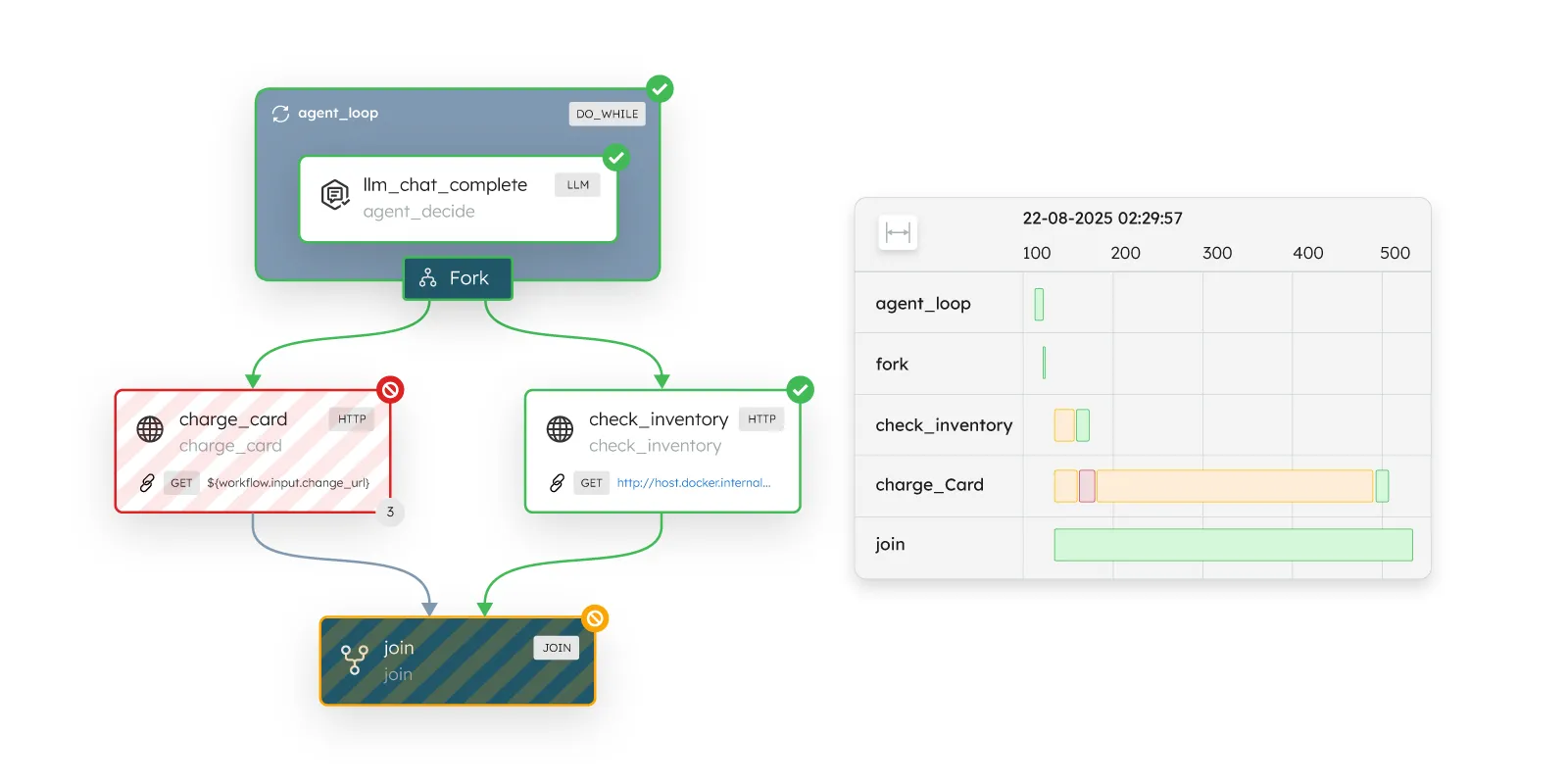
Track every execution in real-time

Analytics

Detailed performance metrics

Access Control

Fine-grained RBAC policies

Audit Logs

Complete audit trail

Developer First by Design
Powered by Open Source

Simple APIs, SDKs in your favorite language, and integrations with the tools you already use.
import io.orkes.conductor.client.ApiClient;
import io.orkes.conductor.client.ApiException;
import io.orkes.conductor.client.api.WorkflowApi;
import io.orkes.conductor.client.model.StartWorkflowRequest;
import io.orkes.conductor.client.model.StartWorkflowResponse;

public class WorkflowExecutor {
    public static void main(String[] args) {
        ApiClient client = new ApiClient();
        client.setBasePath("https://api.orkes.io");
        client.setApiKey("YOUR_API_KEY");

        WorkflowApi api = new WorkflowApi(client);

        StartWorkflowRequest request = new StartWorkflowRequest();
        request.setName("ai-agent-workflow");
        request.setVersion(1);
        request.setInput(null);

        try {
            StartWorkflowResponse response = api.startWorkflow(request);
            System.out.println("Workflow started successfully with ID: " + response.getWorkflowId());
        } catch (ApiException e) {
            System.err.println("Error starting workflow: " + e.getMessage());
        }
    }
}
from conductor.client.configuration.configuration import Configuration
from conductor.client.configuration.settings.authentication_settings import AuthenticationSettings
from conductor.client.workflow.executor.workflow_executor import WorkflowExecutor
from conductor.client.workflow.executor.start_workflow_request import StartWorkflowRequest

config = Configuration(
    base_url='https://api.orkes.io',
    authentication_settings=AuthenticationSettings(
        key_id='YOUR_KEY_ID',
        key_secret='YOUR_KEY_SECRET'
    )
)

executor = WorkflowExecutor(config)

request = StartWorkflowRequest(
    name='ai-agent-workflow',
    version=1,
    input={}
)

workflow_id = executor.start_workflow(request)
print(f"Started workflow with ID: {workflow_id}")
package main
import (
	"fmt"
	"log"
	"github.com/conductor-sdk/conductor-go/sdk/client"
	"github.com/conductor-sdk/conductor-go/sdk/model"
	"github.com/conductor-sdk/conductor-go/sdk/settings"
	"github.com/conductor-sdk/conductor-go/sdk/workflow/executor"
)

func main() {
	apiClient := client.NewAPIClient(
		settings.NewAuthenticationSettings("YOUR_KEY_ID", "YOUR_KEY_SECRET"),
		settings.NewHttpSettings("https://api.orkes.io"),
	)

	workflowExecutor := executor.NewWorkflowExecutor(apiClient)

	request := &model.StartWorkflowRequest{
		Name:    "ai-agent-workflow",
		Version: 1,
		Input:  nil,
	}

	workflowID, err := workflowExecutor.StartWorkflow(request)
	if err != nil {
		log.Fatalf("Error starting workflow: %v", err)
	}

	fmt.Printf("Started workflow with ID: %s
", workflowID)
}
using Conductor.Api;
using Conductor.Client;
using Conductor.Client.Authentication;
using Conductor.Client.Models;
using System;
using System.Collections.Generic;

class Program
{
    static void Main()
    {
        var configuration = new Configuration
        {
            BasePath = "https://api.orkes.io",
            AuthenticationSettings = new OrkesAuthenticationSettings(
                keyId: "YOUR_KEY_ID",
                keySecret: "YOUR_KEY_SECRET"
            )
        };

        var executor = new WorkflowExecutor(configuration);

        var request = new StartWorkflowRequest
        {
            Name = "ai-agent-workflow",
            Version = 1,
            Input = new Dictionary<string, object>
            {
                { "userId", "123" },
                { "message", "Run AI agent" }
            }
        };

        var workflowId = executor.StartWorkflow(request);
        Console.WriteLine($"Started workflow with ID: {workflowId}");
    }
}
import { ConductorClient, WorkflowExecutor } from '@io-orkes/conductor-javascript'

const client = new ConductorClient({
  serverUrl: 'https://api.orkes.io',
  keyId: process.env.KEY_ID,
  keySecret: process.env.KEY_SECRET
})

const workflowExecutor = new WorkflowExecutor(client)

const result = await workflowExecutor.startWorkflow({
  name: 'ai-agent-workflow',
  version: 1,
  input: {
    userId: '123',
    message: 'Run AI agent'
  }
})

console.log('Workflow started:', result.workflowId)

CLI & SDKs

Native SDKs for Python, Java, JavaScript, C#, Go, and more.

Version Control

Git-like versioning for your workflows with rollback support.

Real-time Monitoring

Debug workflows with step-by-step execution visualization.

State Management

Automatic state persistence and recovery on failures.

Enterprise Ready, Battle Tested

Trusted by Fortune 500 companies to handle their most critical workflows.

Up to 99.99%

Availability SLA

1B+

Workflows Executed Daily

Flexible deployments

AWS, Azure, GCP or on-prem

Mission Critical Support

Enterprise Plans

Gartner® Universal Orchestrator

Governing AI Agents, APIs and Humans at Scale

What Our Users Say

Orkes has been instrumental in increasing developer agility, creating cost efficiencies, and building highly reliable and secure applications.
Thisara Alawala
Thisara Alawala
Technical Architect
Prompt engineering is at the heart of agent behavior. The fact that Orkes Conductor treats prompts as first-class citizens shows us you're serious about building for real-world AI orchestration.
Mehdi Fassie logo
Mehdi Fassaie
AI Lead
At Summation, we use Orkes Conductor as the backbone of our workflow engine to orchestrate financial modeling workloads.
Ramachandran R
Ramachandran R
Co-Founder, CTO
We've implemented Orkes Workflow to orchestrate complex, multi-step processes across our distributed systems.
Saini Parminder
CTO
Orkes has been instrumental in increasing developer agility, creating cost efficiencies, and building highly reliable and secure applications.
Thisara Alawala
Thisara Alawala
Technical Architect
Prompt engineering is at the heart of agent behavior. The fact that Orkes Conductor treats prompts as first-class citizens shows us you're serious about building for real-world AI orchestration.
Mehdi Fassie logo
Mehdi Fassaie
AI Lead
At Summation, we use Orkes Conductor as the backbone of our workflow engine to orchestrate financial modeling workloads.
Ramachandran R
Ramachandran R
Co-Founder, CTO
We've implemented Orkes Workflow to orchestrate complex, multi-step processes across our distributed systems.
Saini Parminder
CTO
Orkes has been a great partner—very responsive and supportive in resolving issues quickly. Their robust platform and collaborative team have helped us accelerate project delivery.
Kishore Pocham
Kishore Pocham
Engineer, Software III
Orkes Conductor has become a cornerstone of our media supply chain automation at FooEngine. Its flexibility lets us orchestrate complex workflows without sacrificing reliability.
Arran Corbett
Chief Technology Officer
At Naveo, we see agentic orchestration not as incremental innovation but as a structural leap forward. Our partnership with Orkes will redefine how order and warehouse management is delivered for the next decade.
Jamie Goldring
CEO
UWM logo
Our DevOps Architects don't have to spend 95% of their time managing OSS conductor; they can focus on creating new services and features.
Andy French
Andy French
AVP of Platform Automation
Orkes has been a great partner—very responsive and supportive in resolving issues quickly. Their robust platform and collaborative team have helped us accelerate project delivery.
Kishore Pocham
Kishore Pocham
Engineer, Software III
Orkes Conductor has become a cornerstone of our media supply chain automation at FooEngine. Its flexibility lets us orchestrate complex workflows without sacrificing reliability.
Arran Corbett
Chief Technology Officer
At Naveo, we see agentic orchestration not as incremental innovation but as a structural leap forward. Our partnership with Orkes will redefine how order and warehouse management is delivered for the next decade.
Jamie Goldring
CEO
UWM logo
Our DevOps Architects don't have to spend 95% of their time managing OSS conductor; they can focus on creating new services and features.
Andy French
Andy French
AVP of Platform Automation
To me as CTO, spending time building infrastructure is a waste of time. I don’t want my team building connections, monitors, or logging when there’s infrastructure already in place.
Andres Garcia
Andres Garcia
Chief Technology Officer
Thanks to Orkes Conductor, we can continue to focus on building our workflows. And because it's all hosted in Orkes Cloud, we don't have to think about building and maintaining the orchestration engine ourselves.
Chintan Shah
Chintan Shah
VP of Engineering
Orkes Conductor empowers Tafi to design, orchestrate, and scale workflows with remarkable speed and reliability, enabling us to deliver innovative fintech solutions to our customers faster.
Ruben Abadi
Ruben Abadi
Co-Founder
West Virginia University logo
Our use cases range from managing human tasks, to generating contracts, to handling financial transactions—and even with our complex, niche institutional rules, Orkes just works.
AJ Blosser
Senior Application Developer
To me as CTO, spending time building infrastructure is a waste of time. I don’t want my team building connections, monitors, or logging when there’s infrastructure already in place.
Andres Garcia
Andres Garcia
Chief Technology Officer
Thanks to Orkes Conductor, we can continue to focus on building our workflows. And because it's all hosted in Orkes Cloud, we don't have to think about building and maintaining the orchestration engine ourselves.
Chintan Shah
Chintan Shah
VP of Engineering
Orkes Conductor empowers Tafi to design, orchestrate, and scale workflows with remarkable speed and reliability, enabling us to deliver innovative fintech solutions to our customers faster.
Ruben Abadi
Ruben Abadi
Co-Founder
West Virginia University logo
Our use cases range from managing human tasks, to generating contracts, to handling financial transactions—and even with our complex, niche institutional rules, Orkes just works.
AJ Blosser
Senior Application Developer
Orkes has been instrumental in increasing developer agility, creating cost efficiencies, and building highly reliable and secure applications.
Thisara Alawala
Thisara Alawala
Technical Architect
Prompt engineering is at the heart of agent behavior. The fact that Orkes Conductor treats prompts as first-class citizens shows us you're serious about building for real-world AI orchestration.
Mehdi Fassie logo
Mehdi Fassaie
AI Lead
At Summation, we use Orkes Conductor as the backbone of our workflow engine to orchestrate financial modeling workloads.
Ramachandran R
Ramachandran R
Co-Founder, CTO
We've implemented Orkes Workflow to orchestrate complex, multi-step processes across our distributed systems.
Saini Parminder
CTO
Orkes has been instrumental in increasing developer agility, creating cost efficiencies, and building highly reliable and secure applications.
Thisara Alawala
Thisara Alawala
Technical Architect
Prompt engineering is at the heart of agent behavior. The fact that Orkes Conductor treats prompts as first-class citizens shows us you're serious about building for real-world AI orchestration.
Mehdi Fassie logo
Mehdi Fassaie
AI Lead
At Summation, we use Orkes Conductor as the backbone of our workflow engine to orchestrate financial modeling workloads.
Ramachandran R
Ramachandran R
Co-Founder, CTO
We've implemented Orkes Workflow to orchestrate complex, multi-step processes across our distributed systems.
Saini Parminder
CTO
Orkes has been a great partner—very responsive and supportive in resolving issues quickly. Their robust platform and collaborative team have helped us accelerate project delivery.
Kishore Pocham
Kishore Pocham
Engineer, Software III
Orkes Conductor has become a cornerstone of our media supply chain automation at FooEngine. Its flexibility lets us orchestrate complex workflows without sacrificing reliability.
Arran Corbett
Chief Technology Officer
At Naveo, we see agentic orchestration not as incremental innovation but as a structural leap forward. Our partnership with Orkes will redefine how order and warehouse management is delivered for the next decade.
Jamie Goldring
CEO
UWM logo
Our DevOps Architects don't have to spend 95% of their time managing OSS conductor; they can focus on creating new services and features.
Andy French
Andy French
AVP of Platform Automation
Orkes has been a great partner—very responsive and supportive in resolving issues quickly. Their robust platform and collaborative team have helped us accelerate project delivery.
Kishore Pocham
Kishore Pocham
Engineer, Software III
Orkes Conductor has become a cornerstone of our media supply chain automation at FooEngine. Its flexibility lets us orchestrate complex workflows without sacrificing reliability.
Arran Corbett
Chief Technology Officer
At Naveo, we see agentic orchestration not as incremental innovation but as a structural leap forward. Our partnership with Orkes will redefine how order and warehouse management is delivered for the next decade.
Jamie Goldring
CEO
UWM logo
Our DevOps Architects don't have to spend 95% of their time managing OSS conductor; they can focus on creating new services and features.
Andy French
Andy French
AVP of Platform Automation
To me as CTO, spending time building infrastructure is a waste of time. I don’t want my team building connections, monitors, or logging when there’s infrastructure already in place.
Andres Garcia
Andres Garcia
Chief Technology Officer
Thanks to Orkes Conductor, we can continue to focus on building our workflows. And because it's all hosted in Orkes Cloud, we don't have to think about building and maintaining the orchestration engine ourselves.
Chintan Shah
Chintan Shah
VP of Engineering
Orkes Conductor empowers Tafi to design, orchestrate, and scale workflows with remarkable speed and reliability, enabling us to deliver innovative fintech solutions to our customers faster.
Ruben Abadi
Ruben Abadi
Co-Founder
West Virginia University logo
Our use cases range from managing human tasks, to generating contracts, to handling financial transactions—and even with our complex, niche institutional rules, Orkes just works.
AJ Blosser
Senior Application Developer
To me as CTO, spending time building infrastructure is a waste of time. I don’t want my team building connections, monitors, or logging when there’s infrastructure already in place.
Andres Garcia
Andres Garcia
Chief Technology Officer
Thanks to Orkes Conductor, we can continue to focus on building our workflows. And because it's all hosted in Orkes Cloud, we don't have to think about building and maintaining the orchestration engine ourselves.
Chintan Shah
Chintan Shah
VP of Engineering
Orkes Conductor empowers Tafi to design, orchestrate, and scale workflows with remarkable speed and reliability, enabling us to deliver innovative fintech solutions to our customers faster.
Ruben Abadi
Ruben Abadi
Co-Founder
West Virginia University logo
Our use cases range from managing human tasks, to generating contracts, to handling financial transactions—and even with our complex, niche institutional rules, Orkes just works.
AJ Blosser
Senior Application Developer

Ready to Build Something Amazing?

Join thousands of developers building the future with Orkes.