- COMMUNITY
Our Second Year At Fintech_Devcon Was Amazing!
 Maria Shimkovska Content Engineer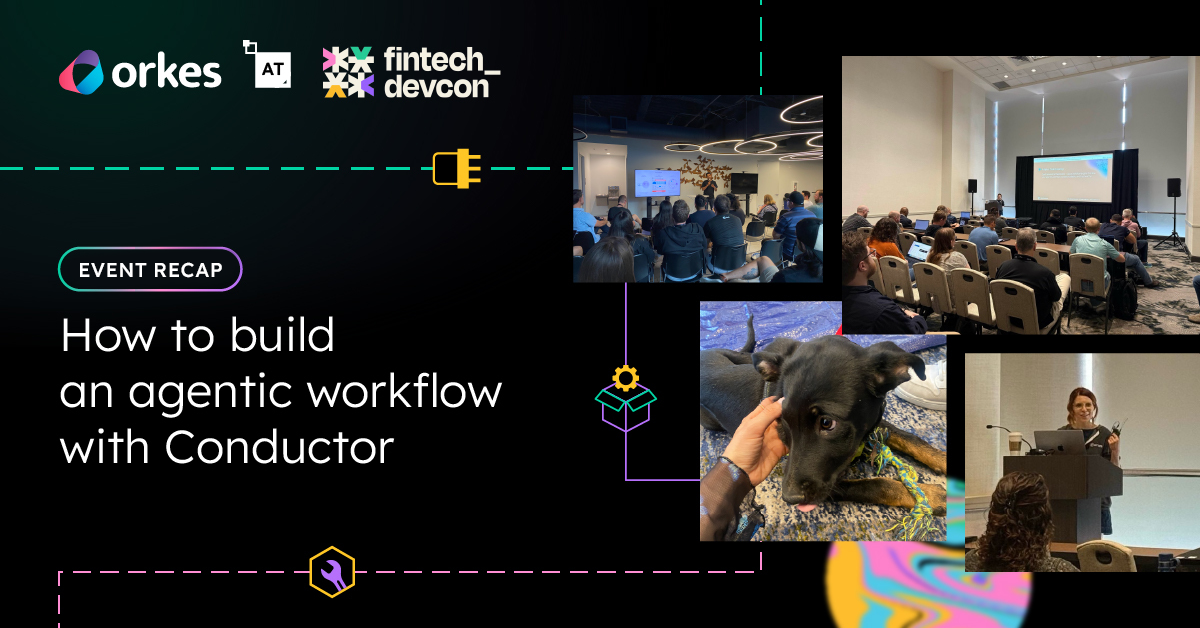
This year, I had the chance to experience fintech_devcon not just as an attendee, but also as a speaker. The conference wrapped up a couple of weeks ago, and honestly, I’m still thinking about it. What an amazing experience. From thoughtful conversations and inspiring talks to some unexpected (and surprisingly fun) highlights.
As I looked back on the conference, I realized a lot of great questions came up about Orkes Conductor and Conductor OSS, so I wanted to put together this article to answer some of them and share a few highlights from the event.
Whether you were there and want to relive the moments, or you couldn’t make it and are curious about agentic workflows (and how Orkes Conductor fits in), I’ve got you covered.
fintech_devcon was amazing and here’s why
fintech_devcon is a two-day conference all about building in fintech. It happens every year in Denver and keeps things small, hands-on, and super developer-focused. You’ll find awesome companies, inspiring speakers, and curious builders from all over the world coming together to share ideas and talk about where fintech is headed.
What was the event like?
For a tech conference, fintech_devcon felt surprisingly small and intimate, but in the best way.
It never felt overwhelming, and it was easy to have real conversations with people who stopped by our booth or who bumped into us in the halls.
One of the coolest parts was seeing folks travel from all over the world (yes, literally the world!) to attend. That kind of turnout says a lot about how excited people are about fintech and where technology is taking the financial industry.
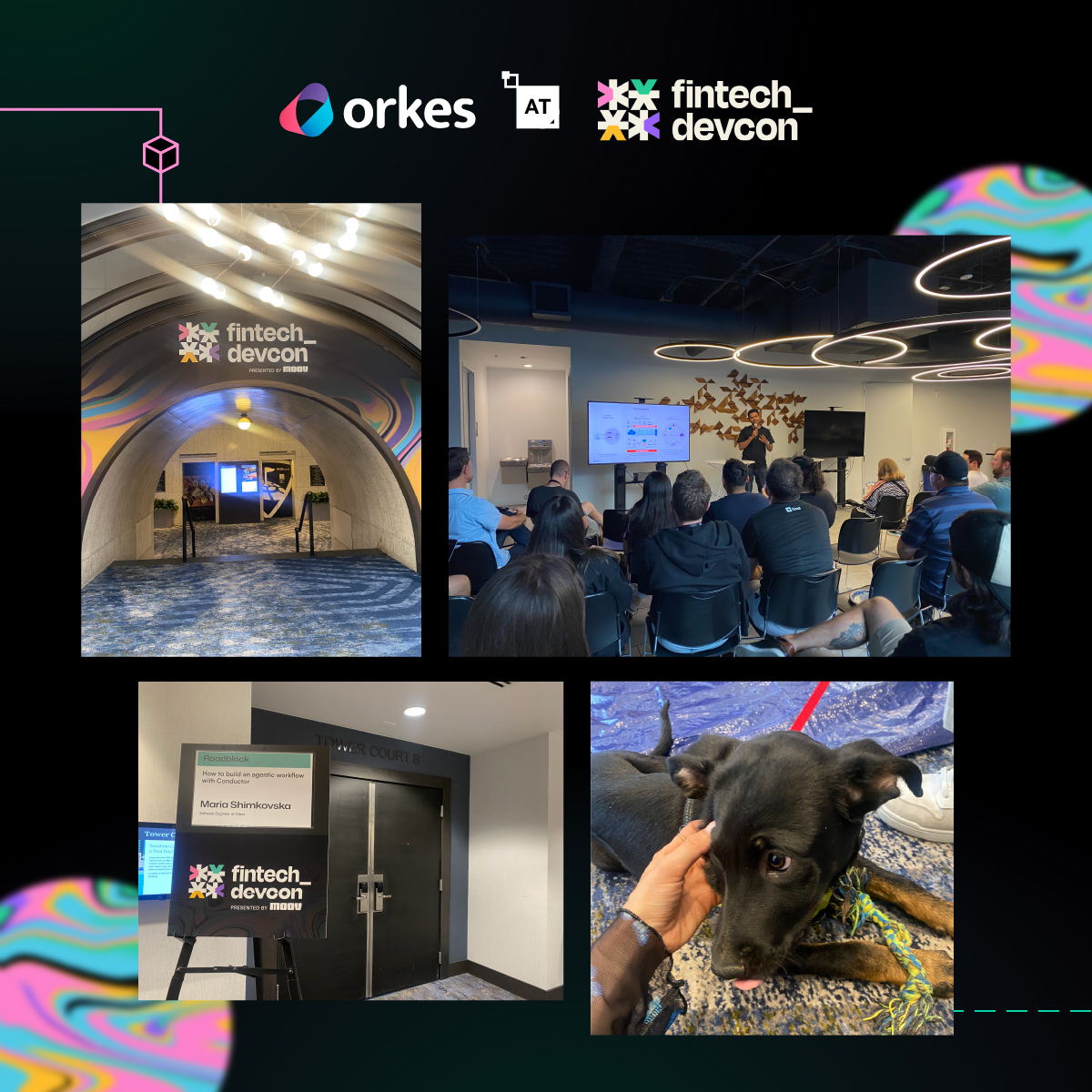
The venue itself was awesome, too. The little touches like the fintech_devcon colors, decorations, ad stickers, really set the vibe well. The moment I walked in and saw the space decked out, it instantly felt like I was in event mode.
Highlights from the conference
Amazing talks happening at all times
Day 2 and 3 were packed with talks, workshops, and keynotes. Everywhere you turned people were discussing payments, compliance, fraud detection, or the future of embedded finance.
And the best part of it all is that it was all highly technical and developer-friendly, which kept the focus on building, not just pitching.
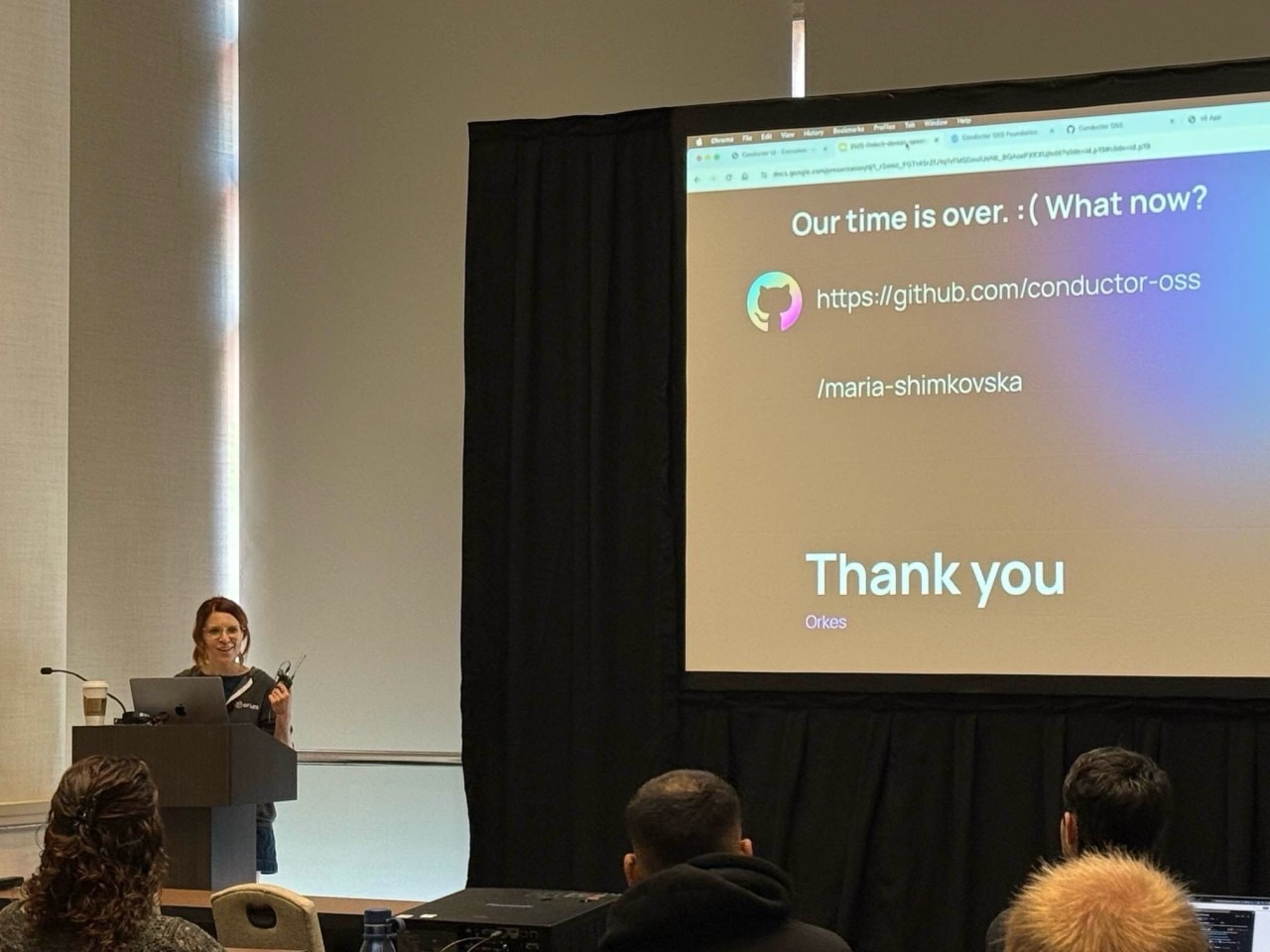
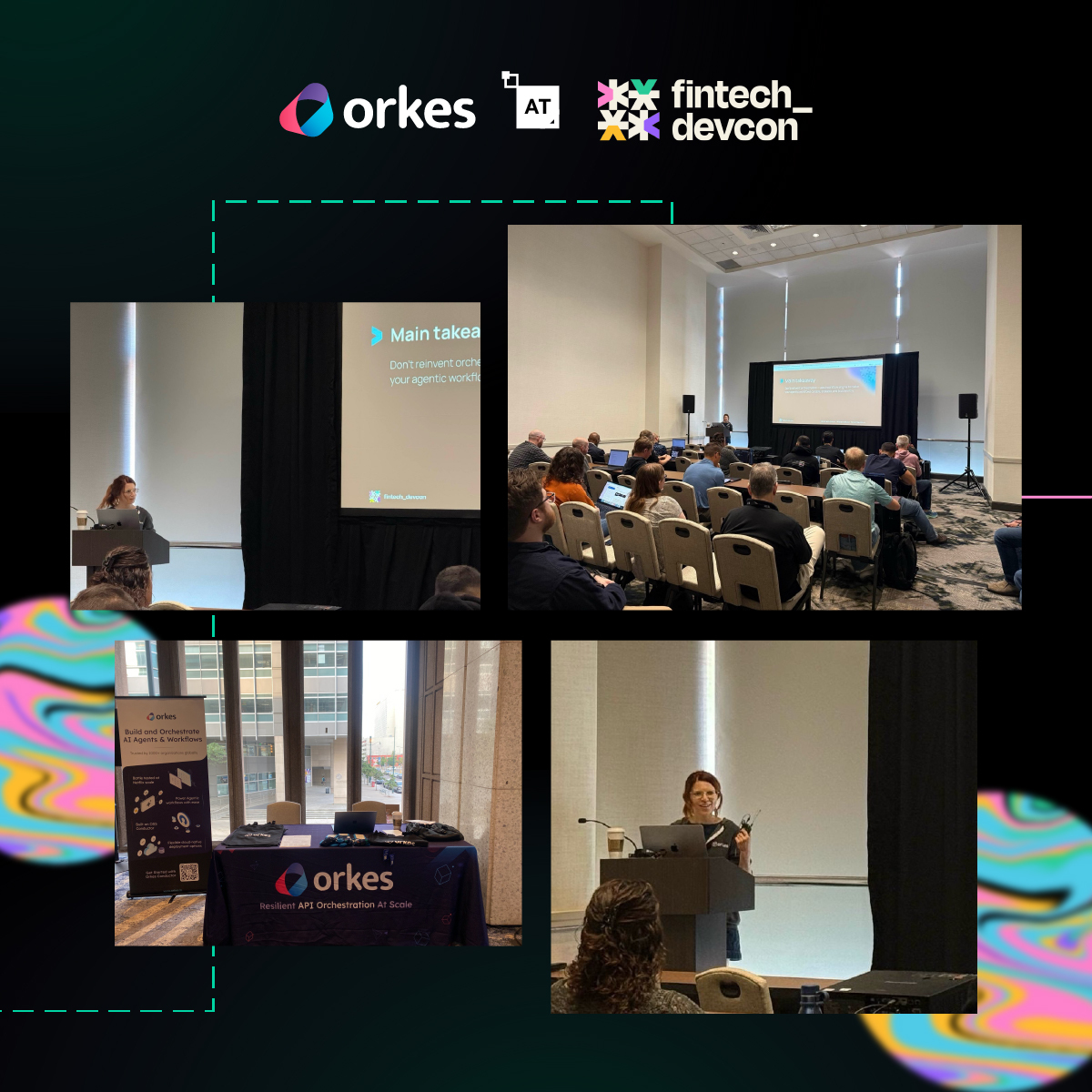
Our talk on how to build agentic workflows using Conductor OSS was one of the highlights for us. It was great to see so many developers lean in, ask thoughtful questions, and get genuinely curious about orchestration and agentic AI.
Surprising attendees: puppies
If you were there, you know this stole the show. A local company brough adoptable puppies to the event and it was so fun to see everyone gush over the little furballs.

The unexpected hit: our socks
We brought socks as booth merch, and I figured they’d be a nice little giveaway, because everyone needs socks, right? But wow… people loved them. Way more than I expected. Turns out socks might just be peak conference swag.
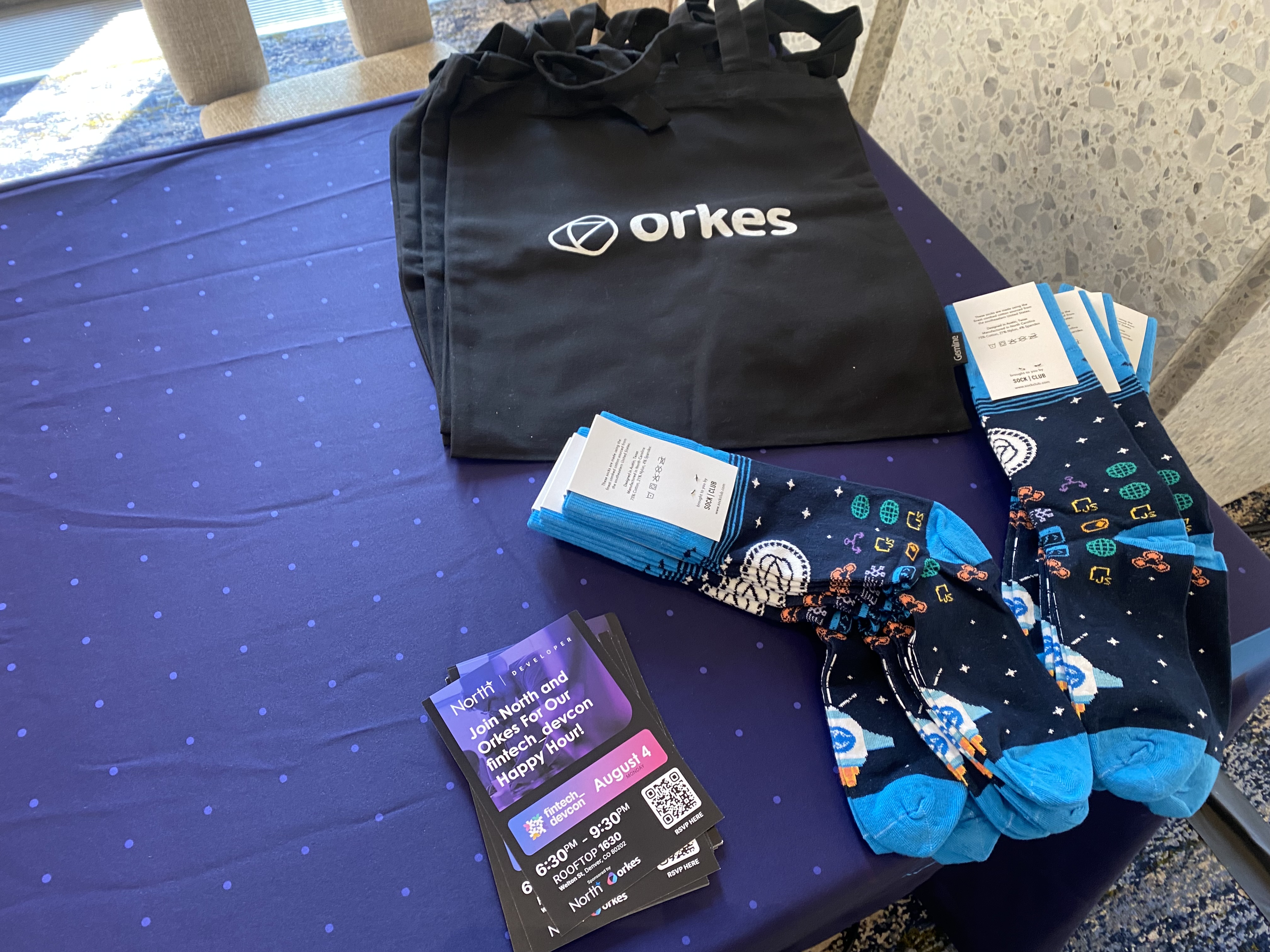
So yes, more socks are definitely on the way. You want socks? Done. You want your AI agents working seamlessly together? We’ve got you covered there too. 😉
What was it like to be a speaker? 🎤
It was absolutely incredible. It was the highlight of the event for me.
On the day of my talk, I gave myself some quiet time in the morning to mentally prepare. Even a 45-minute session takes focus and a bit of mental prep to get in the right headspace.
One tip I’d share for anyone speaking: check out your room beforehand if you can. Walking the space helps you visualize the setup and calm nerves. A couple of hours before my slot, I went over to Tower B where my session was held and built a little “mental map” of the room. By the time I stepped on stage, it already felt familiar.
Fantastic developer meetup with North
The first day of the conference had a relaxed vibe. People were checking in, grabbing swag, exploring booths, and just settling into the venue. The relaxed pace made it easy to strike up conversations, and by the evening, folks were ready for a place to hang out.
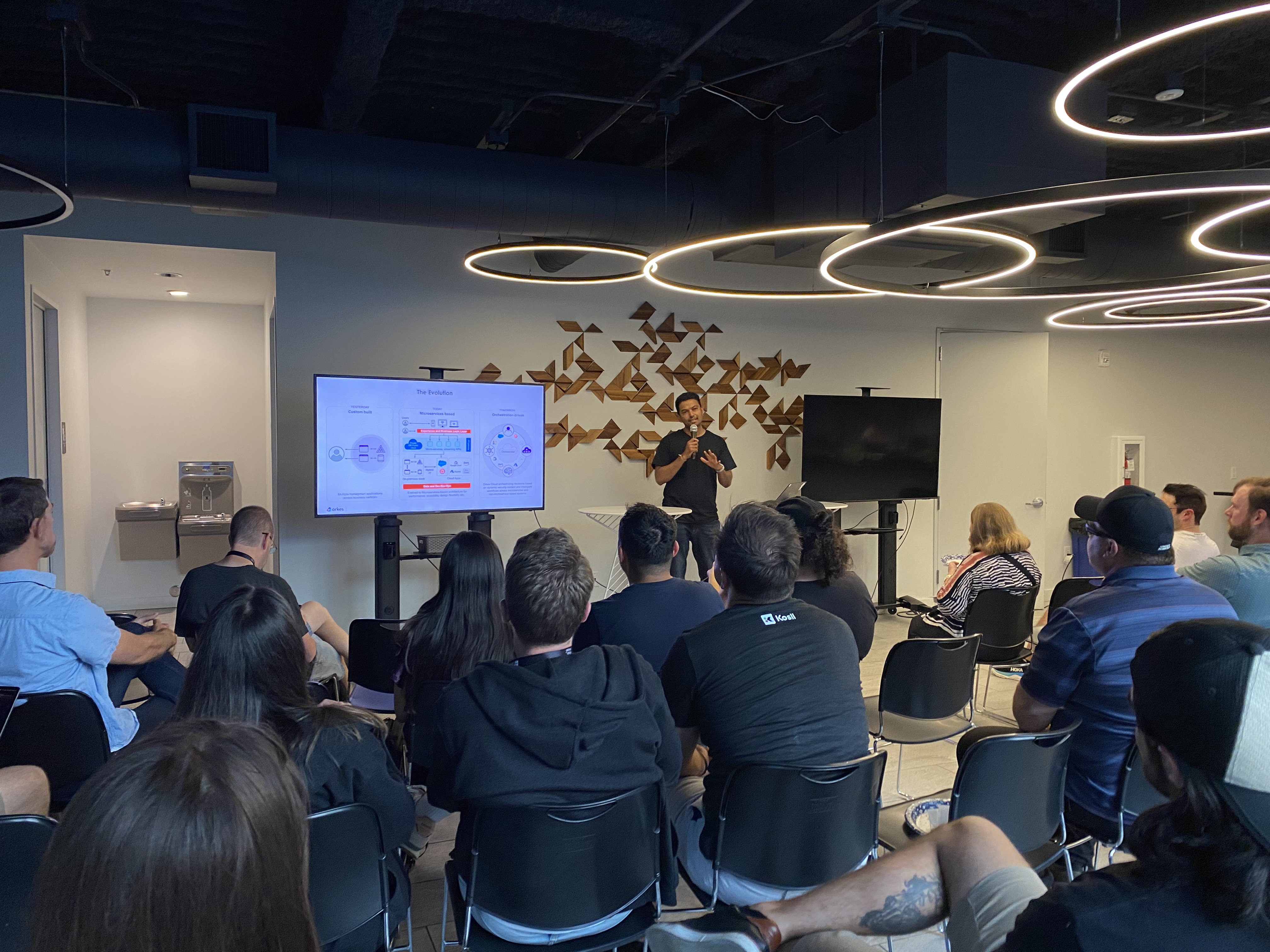
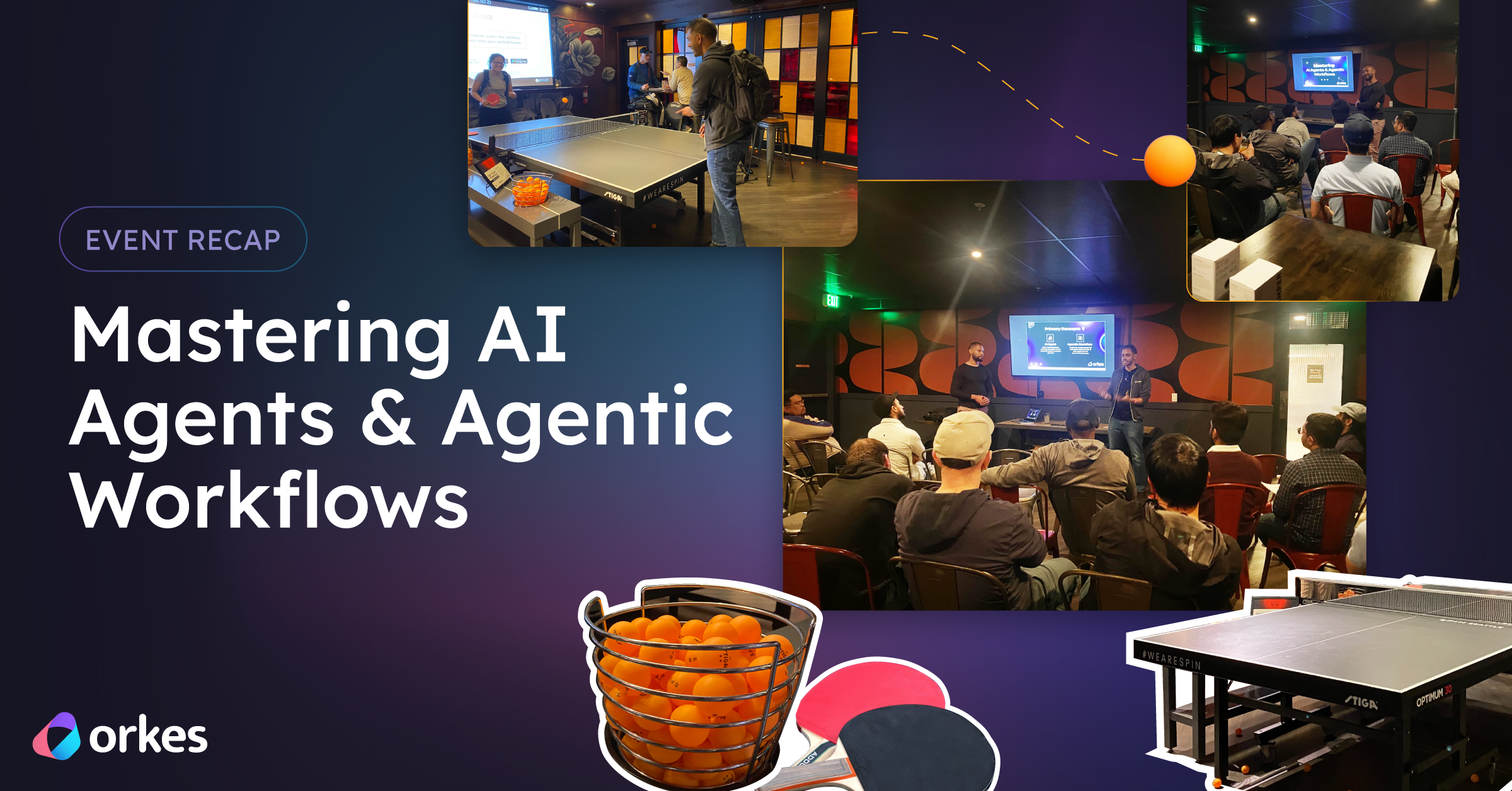
So we teamed up with North to host a developer meetup, and it turned into a fantastic evening of conversations, ideas, and community building. We gave a quick lightning talk on orchestration, shared food and drinks, and spent the night chatting with fellow builders. Huge shoutout to the North team for being such awesome partners in this. 🙌
What people wanted to know about agentic workflows and Orkes
1. What is orchestration?
Orchestration is just a way of organizing how different tasks or services work together. Instead of everything running in a messy, random order, orchestration makes sure each step happens at the right time, in the right way.
2. Why does my AI agent need a workflow engine?
Because agents don’t just do one thing. They often need to call different tools, services, or APIs. A workflow engine keeps all those moving parts in sync, so your agent doesn’t get stuck or lost along the way.
It’s also interesting to know the difference between agents and workflows to really let the importance of a workflow engine sink in.
3. Why Orkes Conductor?
Orkes Conductor is built for scale, flexibility, and reliability. Originally battle-tested at Netflix, it’s now trusted by companies running millions of workflows. With Conductor, you can easily design, run, and monitor workflows (all in one place!) making it the perfect engine for powering complex agentic systems.
4. What’s the easiest way to get started and how hard is it to learn?
The easiest way is to try the Orkes Conductor Developer Edition. It’s free, lightweight, and perfect for experimenting locally. You can spin it up quickly, build a few sample workflows, and get hands-on experience without any heavy setup.
I recommend starting with the Developer Edition’s Agentic Research template to see what an agentic workflow looks like. It’s quick to set up and gives you a clear view of how everything flows.
And don’t worry. It’s pretty easy to get started with. You can begin with simple workflows and build up over time. The Developer Edition includes examples and an easy-to-use UI, and our docs and quickstart guides walk you through everything step by step so you can be up and running in minutes.
Here are a few articles to help you start building real-world use cases:
- How to Build a Simple, Modular, and AI-Powered Fraud Detection Workflow
- Build a Secure, Contained Customer Success AI Agent
- Building an Agentic Workflow: Orchestrating a Multi-Step Software Engineering Interview
5. What happens when I’m ready to scale?
Orkes Conductor is built to scale with you. Each transaction or request simply becomes its own workflow instance, For example, if 1,000 users make transactions at the same time, Orkes Conductor spins up 1,000 workflow instances to handle them in parallel.
The heavy lifting is done by workers (the services that actually perform tasks). To handle more load, you just scale up the number of workers, which is similar to opening more check-in counters at an airport. Conductor itself just directs traffic, and if that single “traffic controller” ever reaches capacity, you can add more Conductor servers.
In practice, companies run millions of workflows with Conductor, so you can feel confident it will keep up as your needs grow.
Your Turn: Experiment with Orkes Conductor
If reading this got you curious about building your own agentic workflows, the best next step is trying the Orkes Conductor Developer Edition. It’s free and comes with templates so you can start experimenting right away.
![AI Orchestration Meetup [April 2024] - Recap](/images/blogs/ai-orchestration-meetup.jpg)